Rokid Max 2 Review: Real User Experience After 3 Months
When I first clicked "buy" on the Rokid Max 2, I was deeply skeptical. I have a shelf full of failed promises: VR headsets that gathered dust because they were too heavy, "smart glasses" that were little more than low-resolution monitors strapped to my face, and various adapters that never quite worked. As someone who spends ten hours a day staring at a laptop screen for work, my primary motivation wasn't gaming or Metaverse fantasies. I wanted a way to work from my couch, on a plane, or in a cafe without the neck strain and the tiny 13-inch constraints of my MacBook Air. After ninety days of daily use, I can finally say I’ve found a device that actually fits into my workflow, though it wasn't without some significant growing pains and a steep learning curve.
The First Impressions and the "Honeymoon" Phase
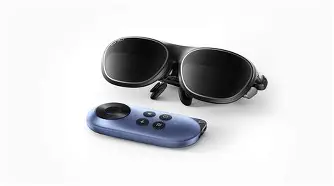
When the box arrived, I was immediately struck by how much more "normal" these looked compared to the original Rokid Max. The design has been refined to look less like sci-fi goggles and more like chunky, high-fashion sunglasses. I appreciated the matte finish and the improved bridge design right out of the box. During my first week, I spent most of my time just marveling at the sheer scale of the display. Rokid claims it’s equivalent to a 215-inch screen viewed from six meters away, and while those marketing numbers always feel a bit abstract, I can attest that it feels massive. It felt like sitting in the "sweet spot" of a high-end IMAX theater.
One thing I noticed immediately was the weight distribution. My old AR glasses always felt like they were trying to slide off the bridge of my nose, leading to constant readjustments. The Max 2 has much more flexible temples (the arms of the glasses) and a revised nose pad system that actually stays put. I was able to wear them for a three-hour flight from New York to Chicago in my first week without that telltale red mark on my nose or a tension headache. However, I soon realized that there’s a difference between "comfortable for a movie" and "comfortable for an eight-hour shift."
Living with the Micro-OLED Display
The heart of the experience is the dual Micro-OLED panels. I’ve been using this for everything from spreadsheet auditing to watching 4K nature documentaries, and the color reproduction is honestly better than my dedicated desktop monitor. The blacks are truly black, which is crucial when you're using a transparent or semi-transparent interface. What I found was that the 120Hz refresh rate makes a massive difference in perceived eye fatigue. Moving my cursor across a giant virtual screen at 60Hz feels jittery and "digital," but at 120Hz, it feels like a physical object moving through space.
One specific thing I appreciated was the diopter adjustment. I have a slight nearsightedness in my left eye, and being able to dial in the focus per eye without needing to wear my prescription glasses underneath or ordering custom lens inserts is a game-changer. Most competitors force you to buy extra accessories for this, but with the Max 2, I just turned the knobs on the top of the frame until the text was crisp. I noticed that if I didn't get these exactly right, I’d end up with a slight "ghosting" effect on white text against dark backgrounds, so I spent a good twenty minutes on my second day really fine-tuning this.
The Laptop Replacement Experiment
Since this review is categorized under laptops, let’s talk about the real-world application of using AR glasses as a primary display. In my experience, the Rokid Max 2 isn't a laptop replacement; it’s a laptop enhancer. Using a single USB-C cable, I plug these into my MacBook or my Windows handheld. What I found was that the "fixed" display mode is great for movies, but for work, I desperately needed the "3DoF" (3 Degrees of Freedom) tracking. This allows the screen to stay pinned in space so I can look away at my physical keyboard and then look back up at the screen. Without this, the screen follows your head movements, which I found to be nauseating when trying to type quickly.
Discover deals on Laptops & Computers — updated daily.
See Deals →I started using the Rokid AR Lite suite with the Station 2, and that’s where the productivity actually clicked. I found that I could have three virtual windows open: a browser in the center, Slack on the left, and a YouTube video or Spotify on the right. I was surprised by how much this improved my focus. In a busy coffee shop, I’m usually distracted by people walking by. With the glasses on and some noise-canceling earbuds, I am essentially in a private office. I noticed that my output increased because I wasn't constantly tabbing between windows; I just moved my head slightly.
The Disappointments and Reality Checks
It’s not all futuristic bliss. One thing that bothered me significantly was the heat. After about two hours of heavy use, the right temple of the glasses—where the processing and connectivity happen—gets noticeably warm. It’s not "burn your skin" hot, but it’s enough to make your temple sweat, which then causes the glasses to start slipping. I found myself taking "cool down" breaks every two hours, which might be good for my eyes anyway, but it’s an annoyance that marketing materials never mention.
The edge clarity is another point of contention. While the center of the image is incredibly sharp, I noticed a slight blurriness toward the extreme corners. If I’m looking at a Windows taskbar in the bottom corner of a 215-inch virtual screen, I sometimes have to physically shift the glasses on my face to read the tiny system clock numbers. This seems to be a limitation of the current bird-bath optics technology. It’s a trade-off: you get a huge FOV (Field of View), but you lose that pixel-perfect sharpness at the very periphery.
I also struggled with the "cable life." Being tethered is fine when you're sitting, but the USB-C cable that comes with the unit is a bit stiff. If I turned my head too quickly, the weight of the cable would tug on the glasses, slightly shifting my focus. I eventually swapped it for a more flexible, high-quality braided cable, which improved the experience, but for a premium product, I expected the out-of-box cable to be more ergonomic.
Technical Specifications and Comparison
To understand where the Rokid Max 2 sits in the current market, I’ve put together a comparison of how it felt against the previous generation and its closest rival I tested earlier this year.
| Feature | Rokid Max (Gen 1) | Rokid Max 2 | Competitor X (Standard AR) |
|---|---|---|---|
| Perceived Screen Size | 215" at 6m | 215" at 6m (Brighter) | 130" at 4m |
| Refresh Rate | 120Hz | 120Hz | 60Hz - 90Hz |
| Diopter Adjustment | 0 to -6.00D | 0 to -6.00D (Easier Knobs) | Requires Inserts |
| Weight | 75g | 75g (Better Balance) | 79g |
| Interpupillary Distance | Fixed | Adjustable via App | Fixed |
Pros and Cons After 3 Months
- Pro: Portability - I can carry a theater-sized screen in a case smaller than a clutch bag. It fits in the side pocket of my backpack easily.
- Pro: Display Quality - The colors and contrast are genuinely impressive. Watching "Dune" in these felt like a more premium experience than my $1,500 OLED TV because of the immersion.
- Pro: Privacy - Working on sensitive documents in public is no longer a worry. Nobody can see what I’m looking at, even if they’re sitting right next to me.
- Pro: Eye Comfort (Diopters) - Being able to adjust for my eyesight without glasses is the single best feature for daily usability.
- Con: Heat Build-up - The right arm gets warm enough to be distracting during long sessions.
- Con: Edge Blurring - Text in the extreme corners can be difficult to read without adjusting the physical position of the headset.
- Con: Tethered Dependency - You are always attached to a device. If your phone or laptop runs out of battery, your screen dies too.
- Con: Audio Leakage - While the built-in speakers are decent, people sitting next to you can definitely hear what you're watching if the volume is above 50%.
The Buying Guide: Should You Get These for Work?
After ninety days, I’ve developed a bit of a checklist for anyone looking to follow my lead and use these in a professional capacity. First, check your hardware. Your laptop must support DisplayPort Alt Mode over USB-C. I spent hours troubleshooting a friend's older laptop only to realize it just wasn't capable of outputting video through that port. Second, consider your environment. These are fantastic for travel and home offices, but I found them less useful in traditional office environments where people constantly need "walk-up" conversations. Taking them on and off every five minutes is a chore.
Looking for the best Laptops & Computers deals on Amazon?
Browse Now →I would also highly recommend looking into the Rokid Station 2 or a similar compute unit. While plugging directly into a phone is great for a quick movie, having a dedicated interface that handles the AR spatial computing makes the Max 2 feel like a finished product rather than just a monitor on your face. Without the spatial software, you're just getting a "mirrored" screen, which can be straining for long-form reading.
Lastly, be prepared for the "social cost." Even though they look more like sunglasses, people will still stare. I had a flight attendant ask me if I was "from the future," and while it’s a fun conversation starter, sometimes you just want to blend in. If you're self-conscious about wearing tech on your face, the Max 2 is better than a VR headset, but it’s still far from invisible.
Conclusion
My journey with the Rokid Max 2 has been one of tempered enthusiasm. I’ve reached a point where I don't feel comfortable working on a tiny laptop screen anymore when I’m away from my desk. The ability to pull a massive, vibrant 120Hz display out of my pocket is a utility I didn't know I needed until I had it. The improvements in comfort and the diopter adjustments make this a significant step up from the first generation and a formidable opponent to any other AR glasses on the market.
However, the technology still has a few hurdles to clear before it becomes a mainstream laptop replacement. The heat management needs work, and the edge-to-edge clarity isn't quite at the level of a physical 4K monitor. If you are a digital nomad, a frequent flyer, or someone who struggles with neck pain from looking down at screens, the Rokid Max 2 is a brilliant solution that I genuinely enjoy using every day. It’s not perfect, but after three months, I can say it’s the first piece of wearable display tech that has earned a permanent spot in my daily carry. I’ve stopped looking for the "next best thing" and started actually getting my work done.