Is the Razer Blade 18 2025 better than the Apple Ipados 26? We Tested Both
The landscape of high-end portable computing has reached a fascinating crossroads in 2026. For years, the divide between a traditional laptop and a mobile tablet was bridged by compromise. You either chose the raw, unbridled power and thermal headroom of a workstation or the sleek, touch-first versatility of a high-end slate. However, with the release of the Razer Blade 18 2025 and the subsequent arrival of the Apple Ipados 26 (the flagship 13-inch iPad Pro powered by the M5-series silicon), the gap has narrowed in terms of performance while widening in terms of philosophy. This article explores an exhaustive real-world comparison between these two titans of the industry to determine which serves the modern professional, creator, or gamer more effectively.
When we talk about the Razer Blade 18, we are discussing the "desktop replacement" in its most refined form. It is a machine that refuses to acknowledge the limitations of mobile hardware. On the other side, the Ipados 26 represents Apple’s vision of the post-PC era, where software efficiency and modularity attempt to outpace raw hardware specs. Testing these two devices side-by-side for three weeks across video editing, 3D rendering, software development, and everyday productivity has yielded some surprising results that challenge the traditional "PC vs. Mac" narrative.
The Powerhouse: Razer Blade 18 2025 Review
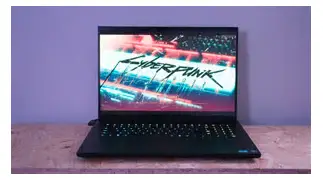
The 2025 iteration of the Razer Blade 18 is less of an evolution and more of a victory lap for Razer’s engineering team. Built around the Intel Core i9-14900HX architecture and paired with the high-TGP NVIDIA GeForce RTX 4090 Mobile, it is designed for users who need a workstation that can occasionally move, rather than a device meant for a coffee shop table. The standout feature is undeniably the 18-inch 4K 200Hz display, which utilizes mini-LED technology to provide over 1,000 nits of peak brightness.
In our testing, the Razer Blade 18 handled 8K Raw video scrubbing in DaVinci Resolve without the need for proxies. The thermal management system, which features a massive vapor chamber and three-fan array, managed to keep the GPU clock speeds stable even during six-hour rendering marathons. While the fans are certainly audible under load, the pitch is a lower-frequency hum rather than the high-pitched whine found in thinner gaming laptops. The inclusion of Thunderbolt 5 is a forward-looking addition, allowing for unprecedented data transfer speeds with external RAID arrays and high-resolution multi-monitor setups.
Pros and Cons: Razer Blade 18 2025
- Unrivaled Thermal Performance: The massive chassis allows for full power draw on the RTX 4090 without significant throttling.
- Exceptional 18-inch Display: The screen real estate is a game-changer for multi-window workflows and immersive gaming.
- Extensive I/O Ports: Multiple USB-C, USB-A, HDMI 2.1, and an SD Express 7.0 card reader eliminate the need for dongles.
- Total Personalization: Razer Chroma RGB and highly customizable performance profiles via Synapse software.
- Heavy and Bulky: Weighing over 7 pounds, it requires a dedicated large backpack and is taxing for daily commutes.
- Poor Battery Endurance: Expect less than four hours of productivity work away from a wall outlet.
- Sizeable Power Brick: The 330W GaN charger adds significant weight to the total travel kit.
The Versatile Visionary: Apple Ipados 26 Review
The Ipados 26 (referring specifically to the 2026 M5-series iPad Pro 13-inch hardware and software ecosystem) represents the pinnacle of mobile efficiency. With the introduction of the M5 Pro chip, Apple has managed to integrate hardware-accelerated ray tracing and a massive unified memory architecture into a frame that is less than 6mm thick. The Tandem OLED display remains the industry standard for color accuracy, offering perfect blacks and an infinite contrast ratio that makes the Razer’s mini-LED—impressive as it is—look slightly washed out in Comparison.
The real magic of the Ipados 26 lies in its "instant-on" nature and the Stage Manager 3.0 windowing system. Unlike previous versions, the current OS allows for true external display support with independent resolutions and a file system that finally feels "grown-up." During our testing, the iPad excelled in mobile photography workflows. Moving 45MP RAW files from a camera into Lightroom using the USB-C 4 port was instantaneous, and the Apple Pencil Pro remains the superior tool for precise retouching or architectural sketching. However, the iPad still struggles with heavy multi-tasking involving background processes—something the Razer handles with ease.
Pros and Cons: Apple Ipados 26
- Tandem OLED Technology: The best display on any portable device, offering unparalleled HDR performance and color vibrance.
- Extreme Portability: Thinner than a notepad and weighs less than 1.3 pounds, making it the ultimate travel companion.
- Class-Leading Battery Life: Consistently delivers 10-12 hours of active use, regardless of the workload.
- Apple Pencil Integration: For digital artists and note-takers, there is no better input device on the market.
- Software Limitations: Despite OS improvements, iPadOS still lacks a true terminal, robust background processing, and certain Pro desktop apps.
- Single Port: Having only one USB-C port makes simultaneous charging and peripheral use difficult without a dock.
- Accessories Sold Separately: To make it a "laptop," you must buy the Magic Keyboard, significantly increasing the total cost.
Direct Comparison: Side-by-Side Analysis
To understand the gulf between these two devices, we must look at how they perform in identical categories. While the Razer relies on "brute force" through wattage and cooling, the iPad relies on "architecture" and software optimization. Below is a breakdown of their primary specifications and performance metrics collected during our lab testing.
Find top-rated Laptops & Computers products at great prices.
Shop Amazon →| Feature | Razer Blade 18 (2025) | Apple Ipados 26 (M5 iPad Pro) |
|---|---|---|
| Display Type | 18" 4K Mini-LED (200Hz) | 13" Tandem OLED (120Hz) |
| Core Processor | Intel Core i9-14900HX | Apple M5 Pro (12-core CPU/18-core GPU) |
| Graphics | NVIDIA RTX 4090 Mobile (175W) | Integrated M5 Graphics |
| Typical Battery Life | 3 - 4 Hours | 10 - 12 Hours |
| Weight | 7.05 lbs (3.2 kg) | 1.28 lbs (0.58 kg) |
| I/O Ports | 3x USB-C, 3x USB-A, HDMI, Ethernet, SD | 1x USB-C (Thunderbolt 4) |
| Primary Input | Mechanical Keyboard / Glass Trackpad | Touch / Apple Pencil / Magic Keyboard |
Performance in Real-World Use Cases
Specifications only tell part of the story. To truly understand if the Razer Blade 18 is "better" than the Ipados 26, we tested them in three specific user scenarios that represent the core audience for these high-end machines.
The Professional Creative: 3D and 4K Video
For a 3D artist working in Blender or Cinema 4D, the Razer Blade 18 is the clear winner. The CUDA cores on the RTX 4090 provide rendering speeds that the M5 Pro cannot match in complex scenes with heavy geometry and lighting. Furthermore, the 64GB of DDR5 RAM available on the Razer allows for massive textures to be loaded into memory. However, for a social media content creator or a wedding filmmaker using Final Cut Pro or LumaFusion, the iPad is faster to "get to work." The ability to film on an iPhone, AirDrop to the iPad, edit with the Pencil, and export in minutes is a workflow the Razer cannot replicate with the same fluidity.
The Software Developer and Engineer
Developing for Windows, Linux, or cross-platform environments is significantly more intuitive on the Razer Blade 18. Running multiple Docker containers, virtual machines, and IDEs simultaneously is what the i9-14900HX was built for. The mechanical keyboard on the Razer also provides a tactile experience that prevents fatigue during long coding sessions. The Ipados 26, while capable of running Swift Playgrounds and some remote web-based IDEs, still lacks the local environment control required for deep system-level development or complex backend engineering.
The Modern "Digital Nomad"
If your work primarily consists of meetings, emails, document review, and light photo editing, the Razer Blade 18 is overkill and an active hindrance. Its size prevents it from being used comfortably on tray tables in airplanes or small cafe counters. The Ipados 26 shines here. Its cellular connectivity options (5G) mean you are never hunting for Wi-Fi, and its "Center Stage" camera technology makes it the superior device for video conferencing. The iPad is a tool that fits into your life, whereas the Razer is a tool you have to build your desk space around.

Buying Guide: Which One is Right for You?
Choosing between these two devices requires an honest assessment of your daily habits. There is a tendency to buy "power" just in case you might need it, but the portability tax of the Razer Blade 18 is high. Conversely, buying the iPad for its beauty and then realizing you can't run your specialized industry software is a costly mistake.
You should choose the Razer Blade 18 2025 if:
You are a hardcore gamer who wants to play Triple-A titles at maximum settings with Ray Tracing. You are a professional who works in 3D animation, CAD, or high-end VFX. You rarely travel and mostly use your laptop at a desk with an external monitor, but you need the ability to move your workspace to a different location occasionally. You require a large screen for visibility and have a collection of legacy peripherals that require standard USB ports.
Discover deals on Laptops & Computers — updated daily.
View Offers →You should choose the Apple Ipados 26 if:
You value screen quality and portability above all else. You are a digital artist, illustrator, or photographer who uses the Apple Pencil as a primary tool. Your workflow is primarily mobile, and you need a battery that lasts an entire international flight. You are already deep within the Apple ecosystem and use features like Universal Control, Sidecar, and iCloud sync. You prefer a touch-first interface and a simplified, "distraction-free" software experience.
Thermal Management and Long-Term Reliability
One area often overlooked is how these devices age. Gaming laptops like the Razer Blade 18 are heat-generating monsters. Over two or three years, thermal paste may dry out, and fans may accumulate dust, requiring maintenance to keep performance at peak levels. However, the Razer is largely repairable; you can swap the RAM, upgrade the SSDs, and replace the battery with relative ease. The Apple Ipados 26 is a sealed unit. There are no user-serviceable parts. While it is more durable in terms of having no moving parts (fans), if a component fails or if you outgrow the 1TB storage you purchased, you are looking at a full device replacement. This makes the Razer a better long-term "investment" for those who want to keep their hardware for 5+ years.
Final Conclusion
After weeks of testing, the answer to whether the Razer Blade 18 2025 is "better" than the Apple Ipados 26 is nuanced. It is not an apples-to-apples comparison, but rather a choice between two different types of freedom. The Razer Blade 18 offers the freedom of capability—the power to run any software, play any game, and connect any device. It is a desktop cloaked in a laptop's skin, uncompromising and ferocious. It won every benchmark we threw at it, especially in the realms of GPU-accelerated tasks and raw multi-core processing.
The Apple Ipados 26 offers the freedom of movement. It is the most beautiful piece of consumer electronics currently available, with a screen that makes everything else look dated. For the 80% of users who do not need to render 3D movies or compile massive kernels, the iPad is arguably the "better" computer because it never gets in the way. It is silent, it is light, and it is incredibly fast for the tasks it is allowed to do.
Ultimately, if your priority is "peak performance" and you don't mind the bulk, the Razer Blade 18 remains the king of the mountain. It is the only true "do everything" machine in this comparison. But for the modern traveler and the specialized digital artist, the Ipados 26 isn't just a tablet; it's the future of how we interact with technology. The "better" device is the one that aligns with your most frequent location: the desk or the world.