Head-to-Head: Macbook Pro vs Macbook Pro 14 M3 2023 (Detailed Comparison)
The release of the MacBook Pro 14-inch with the M3 family of chips in late 2023 marked a significant shift in Apple's portable workstation strategy. For years, the MacBook Pro lineup was stratified by size and ports, but with the introduction of the M3 series, Apple consolidated the "Pro" identity into two primary chassis sizes: 14 inches and 16 inches. However, this has created a unique dilemma for consumers. When we look at a "Head-to-Head: Macbook Pro vs Macbook Pro 14 M3 2023," we are often comparing the legacy 13-inch design or older 14-inch iterations against the modern, base-model M3 14-inch MacBook Pro.
In this editorial analysis, we examine how the late 2023 14-inch model with the standard M3 chip redefines the entry point for professional-grade laptops. We will explore the nuances of the Liquid Retina XDR display, the efficiency of the 3-nanometer architecture, and the practical implications for students, creative professionals, and general users. Choosing between a standard "MacBook Pro" and the specific "MacBook Pro 14 M3" requires understanding that the latter is now the gateway to Apple's high-end hardware features, even if its internal processor is more closely related to the MacBook Air than to its "Pro" and "Max" siblings.
The Evolution of the MacBook Pro Identity
Historically, the MacBook Pro was easily defined: it was the laptop with the fan, the better screen, and the "Pro" ports. However, the transition to Apple Silicon blurred these lines. For several years, the "MacBook Pro" moniker was shared by the old 13-inch design (featuring the Touch Bar) and the redesigned 14-inch and 16-inch models. In 2023, Apple officially retired the 13-inch chassis, replacing it with a 14-inch model powered by the base M3 chip. This move shifted the baseline expectations of what a Pro laptop should offer.
When prospective buyers compare a generic MacBook Pro against the specific 2023 14-inch M3 model, they are usually weighing the value of the modern industrial design. The 2023 model brings the high-refresh-rate ProMotion display and the HDMI/SD card slot configuration to a wider audience. But as we will see, the "M3" designation (without a Pro or Max suffix) carries certain limitations that power users must carefully consider before making an investment.
Detailed Product Analysis: The MacBook Pro 14 M3 (Late 2023)
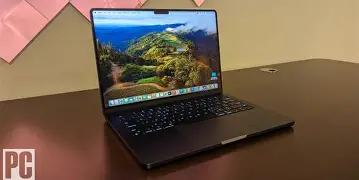
The MacBook Pro 14 M3 is a hybrid machine in many ways. It uses the premium, squared-off aluminum chassis originally debuted for the M1 Pro/Max series, offering a significant upgrade in build quality and thermal management compared to the older versions of the line. Under the hood, however, it utilizes the standard M3 chip, which features an 8-core CPU and up to a 10-core GPU.
The Performance of the 3nm M3 Chip
The core of the 2023 14-inch model is the M3 chip, built on a cutting-edge 3-nanometer process. In real-world use cases, such as rendering 4K video in Final Cut Pro or compiling code in Xcode, the M3 shows approximately a 15% to 20% improvement over the M2. More importantly, the M3 GPU introduces "Dynamic Caching," a technology that allocates local memory in hardware in real-time. For professional users working in 3D rendering or high-end graphics, this means the GPU uses only the exact amount of memory needed for each task, significantly increasing performance across demanding applications.
Display and Visual Fidelity
Perhaps the most compelling reason to choose the 14-inch M3 over any previous standard MacBook Pro is the Liquid Retina XDR display. This is a mini-LED panel capable of 1,000 nits of sustained full-screen brightness and 1,600 nits of peak brightness for HDR content. Contrast this with the 500 nits found on the older 13-inch units or the current MacBook Air. Furthermore, the ProMotion technology allows for a variable refresh rate up to 120Hz. This results in incredibly fluid scrolling and animations, which reduces eye strain during long hours of text editing or UI design.
Find top-rated Laptops & Computers products at great prices.
See Deals →Thermal Design and Port Selection
Unlike the MacBook Air, which is fanless, the 14-inch M3 MacBook Pro features an active cooling system. This is a critical distinction for professionals. While the M3 chip is highly efficient, sustained workloads like long-form video exports or complex data simulations generate heat. The single-fan system in the 14-inch M3 allows the processor to maintain peak performance without thermal throttling. Regarding ports, the 2023 model includes a dedicated MagSafe 3 charging port, two Thunderbolt / USB 4 ports, an HDMI 2.1 port, and an SDXC card slot. It is important to note that the base M3 model has one less Thunderbolt port than its M3 Pro and M3 Max counterparts.
MacBook Pro 14 M3 2023: Pros and Cons
- Pro: Exceptional Battery Life — The efficiency of the 3nm M3 chip combined with the larger battery in the 14-inch chassis allows for up to 22 hours of video playback, easily lasting two full workdays for light tasks.
- Pro: Pro-Grade Display — The mini-LED Liquid Retina XDR display provides the best visual experience in its class, essential for color-grading and high-end media consumption.
- Pro: Diverse Port Array — The inclusion of the SD card slot and HDMI port eliminates the need for external dongles for most photographers and presenters.
- Pro: Advanced Thermal Management — The internal fan ensures that performance remains consistent even during heavy processing tasks that would slow down a MacBook Air.
- Con: Limited External Display Support — One of the biggest drawbacks of the base M3 chip is that it natively supports only one external display when the laptop lid is open (though a software update allows for two when the lid is closed).
- Con: Base RAM Constraints — The entry-level model often starts with 8GB of unified memory, which many professionals argue is insufficient for a laptop with "Pro" in the name.
- Con: Reduced Port Count — Compared to the M3 Pro/Max models, this version loses one Thunderbolt port on the right-hand side.
Legacy 13-inch/Base MacBook Pro: Pros and Cons
- Pro: Portability — The older 13-inch design or thinner "standard" Pro models are slightly lighter and more compact, fitting into smaller messenger bags with ease.
- Pro: Price Point — Older or refurbished base MacBook Pro models represent a significantly lower entry cost into the MacOS ecosystem.
- Pro: Familiar Interface — For those who actually liked the Touch Bar, the legacy 13-inch MacBook Pro is the only way to retain that specific hardware feature.
- Con: Outdated Display — Standard Retina displays lack the deep blacks, high brightness, and 120Hz refresh rates of the newer 14-inch panels.
- Con: Thicker Bezels — The older design aesthetic features much larger borders around the screen, making the workspace feel cramped by modern standards.
- Con: 720p Webcam — Most legacy base models are stuck with an inferior 720p camera, whereas the 2023 14-inch model boasts a 1080p FaceTime HD camera with an advanced image signal processor.
Head-to-Head Comparison Table
The following table compares the essential specifications of the general "Base" MacBook Pro expectations (based on the final 13-inch M2 model) against the specific 2023 14-inch M3 MacBook Pro to highlight the generational jump.
| Feature | Legacy MacBook Pro (13-inch M2) | MacBook Pro 14 M3 (2023) |
|---|---|---|
| Processor | M2 (5nm) - 8 CPU / 10 GPU | M3 (3nm) - 8 CPU / 10 GPU |
| Display Type | Retina (LCD) - 500 nits | Liquid Retina XDR (Mini-LED) - 1600 nits peak |
| Refresh Rate | Fixed 60Hz | ProMotion (Up to 120Hz) |
| Ports | 2x Thunderbolt (USB-C) | 2x Thunderbolt, HDMI, SDXC, MagSafe 3 |
| Webcam | 720p FaceTime HD | 1080p FaceTime HD |
| Audio | Stereo Speakers | High-fidelity 6-speaker system with force-cancelling woofers |
| Battery Life | Up to 20 Hours | Up to 22 Hours |
Buying Guide: Which MacBook Pro is Right for You?
Deciding between a general MacBook Pro and the 2023 14-inch M3 depends largely on your specific workflow and your tolerance for "dongle life." In this section, we break down the decision-making process based on common user profiles.
The Creative Hobbyist and Student
If you are a student or someone who dabbles in photo editing, social media management, and light video work, the 14-inch M3 (2023) is the gold standard. The screen quality alone justifies the price difference over older models. Being able to see accurate colors and high dynamic range while editing photos is a game-changer. However, if you are strictly taking notes and browsing the web, you might find that a high-end MacBook Air or an older MacBook Pro 13-inch meets your needs while saving you several hundred dollars.
The Professional Developer
For software engineers, the choice is more complex. The M3 chip is incredibly fast at compiling code, but the 8GB of base RAM is a significant bottleneck for those running Docker containers, multiple virtual machines, or heavy IDEs like IntelliJ. If you are choosing the 14-inch M3, it is highly recommended to configure it with at least 16GB or 24GB of unified memory. If your budget is tight, an older 14-inch model with the M1 Pro or M2 Pro chip (which usually starts with 16GB of RAM) might actually serve a developer better than a brand-new base M3 model.
The Video Editor and 3D Artist
If your primary work involves high-resolution video editing or 3D modeling, the 2023 M3 14-inch provides a solid entry point. The hardware-accelerated ray tracing and mesh shading in the M3 GPU are massive improvements for 3D workflows. However, be aware of the "M3 vs M3 Pro" distinction. While the 14-inch M3 (2023) is a high-quality machine, the M3 Pro version offers more memory bandwidth and higher core counts which drastically reduce rendering times. For those moving from an Intel-based MacBook Pro, either Apple Silicon model will feel significantly faster.
Looking for the best Laptops & Computers deals on Amazon?
See Deals →The Frequent Traveler
Business professionals who spend their lives in airports and coffee shops will appreciate the 14-inch M3 for its battery life. It offers the longest endurance of any MacBook Pro ever made. The MagSafe 3 charging port is also a safety feature for travel; if someone trips over your cable, the laptop won't fly off the table. The 14-inch size is the perfect middle ground between the 13.6-inch Air and the massive 16-inch Pro, fitting comfortably on an airplane tray table while still providing enough screen real estate for multitasking.
Understanding Memory and Storage Configurations
A critical part of this comparison is how Apple handles unified memory. In the 2023 MacBook Pro 14 M3, the RAM is integrated directly into the chip package. This allows for incredibly low latency and high bandwidth, but it means you cannot upgrade the memory after purchase. Buyers are often caught between the "base" MacBook Pro and the "upgraded" models. We recommend prioritizing memory over storage. It is much easier to attach a fast external SSD for your files than it is to deal with a machine that is constantly swapping memory to the disk because you have too many browser tabs and professional apps open simultaneously.
The M3 architecture also features a 100GB/s memory bandwidth. While this is lower than the M3 Pro (150GB/s) or M3 Max (up to 400GB/s), it is still significantly faster than most Windows laptops in the same price bracket. For the majority of users, this bandwidth is more than sufficient, but it underlines why this specific 14-inch model sits in a unique spot: it has the body of a supercar but the engine of a high-performance sports sedan.
Final Conclusion
The "Head-to-Head: Macbook Pro vs Macbook Pro 14 M3 2023" reveals a clear winner for the modern buyer, but with important caveats. The 2023 14-inch M3 model represents the final culmination of Apple's transition away from the legacy designs of the last decade. It offers a spectacular display, a versatile set of ports, and a CPU/GPU architecture that brings professional features like ray tracing to a mainstream price point. Compared to any "standard" or legacy MacBook Pro, the 2023 14-inch model is superior in nearly every measurable way, from its 1080p webcam to its industry-leading battery life.
However, the "Pro" label on the 14-inch M3 should be interpreted with care. Because it uses the base M3 chip, it is essentially a very fancy, actively cooled version of the MacBook Air in terms of raw processing power and external display limitations. For users who need a stunning screen for media consumption or primary work, and who value having an SD card slot and HDMI port built-in, the 14-inch M3 is a fantastic investment. For those who truly push their machines with massive video projects or complex engineering tasks, the 14-inch M3 is merely the starting point, and moving up to the M3 Pro or M3 Max variants may be necessary to fully realize the "Pro" potential of the 14-inch chassis. Ultimately, the 2023 14-inch M3 MacBook Pro is the best "all-around" laptop Apple makes, successfully bridging the gap between everyday portability and professional capability.