Don't Buy Until You Read This: Final Ze300 vs Marshall Middleton II
Introduction: The Clash of Portability and Power
The landscape of portable personal audio has fractured into two distinct camps: the devotees of ultra-compact, high-fidelity wireless earbuds and the proponents of robust, room-filling portable speakers. Historically, these two categories rarely competed for the same dollar. However, as modern lifestyles demand seamless transitions from solo commuting to social gatherings, consumers are increasingly forced to choose between the intimate precision of a premium earbud or the shared energy of a high-performance speaker. Enter the Final ZE3000 (often categorized in specific markets under its ZE line evolution) and the Marshall Middleton II. These two devices represent the pinnacle of their respective forms, but they offer vastly different psychological and physical experiences for the listener.
Final, the Japanese brand known for its uncompromising pursuit of acoustic perfection, has designed the ZE3000 to challenge the notion that true wireless earbuds cannot produce truly "audiophile" sound. On the other hand, Marshall, a name synonymous with rock and roll history, has refreshed its Middleton line with the Mark II version, aiming to dominate the premium portable speaker market with quad-driver power and a rugged aesthetic. This article breaks down why a buyer might choose one over the other, the technical engineering behind their sound signatures, and the real-world scenarios where each shines or falters. If you are standing at the crossroads of personal audio, this deep dive is essential reading before you commit your budget.
Final ZE3000: The Purist’s Personal Sanctuary
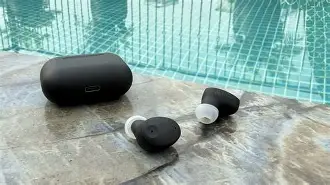
The Final ZE3000 is not your typical lifestyle earbud. While competitors like Apple, Sony, and Bose focus heavily on Active Noise Cancellation (ANC) and transparency modes, Final has famously pivoted in the opposite direction. The ZE3000 is built on the philosophy that DSP (Digital Signal Processing) and noise-canceling microphones often degrade the purity of the audio signal. Instead, Final has invested heavily in internal acoustic engineering, specifically developing the "f-Core for Wireless" driver unit. This 6mm driver is unique because its diaphragm is molded together with the edge using a special adhesive-free method, reducing distortion and ensuring a level of precision rarely heard in the wireless segment.
The design of the ZE3000 is unapologetically geometric. Heavily influenced by their wired flagship models, the earbuds feature a "shibin" finish—a textured coating reminiscent of high-end SLR camera bodies. This serves a dual purpose: it provides a premium tactile feel and resists fingerprints and oils. In terms of ergonomics, the "three-point fit" system ensures that the earbud sits securely in the ear without exerting unnecessary pressure on any single point of the concha. This makes them ideal for long-distance travel or deep-focus work sessions where physical fatigue is the enemy of enjoyment.
Sound-wise, the ZE3000 is characterized by its "natural" signature. It does not boost the bass to artificial levels, nor does it attempt to sparkle with aggressive treble. Instead, it recreates a sense of space—a "soundstage"—that feels remarkably wide for a closed-back earbud. Instruments have air around them, and vocals are positioned with a clarity that allows the listener to hear the minute details of a singer's breath or the subtle decay of a piano note. For the buyer who values accuracy over impact, the Final ZE3000 is a specialized tool for critical listening.
Marshall Middleton II: The Social Powerhouse
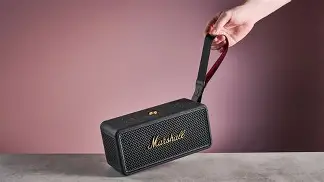
If the Final ZE3000 is a private gallery, the Marshall Middleton II is a street-side concert. Marshall has taken the foundation of the original Middleton—a heavy-hitter in the portable speaker world—and refined it for the Mark II generation. The Middleton II is built around "Stack Mode," which allows users to connect multiple speakers together, but even as a standalone unit, it is a formidable beast. It utilizes a quad-driver setup: two 3-inch woofers, two 3/5-inch tweeters, and two passive radiators. This configuration delivers what Marshall calls "True Stereophonic," a unique form of multi-directional sound that ensures the listener experiences a stereo image regardless of where they are standing in relation to the speaker.
The Middleton II is synonymous with durability. Sporting an IP67 rating, it is both dust-tight and waterproof up to one meter. The exterior is wrapped in Marshall’s signature pebbled vinyl, reinforced with a heavy-duty silicone strap for carrying. This is a device built for the elements—be it a sandy beach, a dusty workshop, or a poolside party. It also functions as a power bank, allowing users to charge their smartphones via the USB-C port, acknowledging that the Middleton II is often the "hub" of a social gathering.
The sound profile of the Middleton II is tuned for energy and authority. Unlike the Final earbuds, which strive for neutrality, the Marshall embraces the "V-shape" curve that listeners love for contemporary genres. The bass is deep and physical, capable of vibrating wooden surfaces, while the highs have enough bite to cut through outdoor ambient noise. However, Marshall provides top-mounted analog controls for bass and treble, allowing the user to dial back the aggressiveness for more acoustic or jazz-oriented tracks. It is a "one-size-fits-all" solution for those who want their music to be felt as much as heard.
Discover deals on Audio & Headphones — updated daily.
Browse Now →Head-to-Head Comparison: Portability vs. Presence
Choosing between these two depends largely on your primary "listening environment." The Final ZE3000 is designed for the individual. It is the perfect companion for the daily train commute, the office cubicle, or the quiet evening at home with a glass of wine. Its lack of ANC is mitigated by its excellent passive isolation, but it thrives in environments where you want to shut out the world to focus on the music. It is a subtle, sophisticated choice that disappears into a pocket.
The Marshall Middleton II, by contrast, is a statement piece. It weighs significantly more and requires a dedicated space in a backpack. It is the choice for the buyer who wants to share their music. Whether it's providing the soundtrack for a backyard BBQ or acting as a TV soundbar for a laptop in a hotel room, the Middleton II offers a scale of sound that no earbud can replicate. The physical presence of bass—the actual movement of air—is the defining differentiator here.
From a technical standpoint, the Final ZE3000 supports high-quality codecs like aptX Adaptive, making it superior for Android users with high-resolution libraries. The Marshall Middleton II focuses on connection stability and multi-point pairing, allowing two devices to be connected simultaneously so friends can trade off being the "DJ." The Middleton II also offers significantly more "utility" with its 20+ hours of battery life and charging capabilities, whereas the ZE3000 focuses purely on the act of listening, offering about 7 hours per charge with additional cycles in the case.
Pros and Cons: Final ZE3000
- Pro: Exceptional soundstage and imaging for a wireless earbud, providing a sense of space usually reserved for wired models.
- Pro: The "f-Core for Wireless" driver produces extremely low distortion, allowing for detailed, non-fatiguing listening.
- Pro: Lightweight and highly ergonomic design with a premium, textured "shibin" finish.
- Pro: Supports aptX Adaptive for high-resolution audio transmission over Bluetooth.
- Con: Lack of Active Noise Cancellation (ANC) means it struggles in high-noise environments like airplane cabins.
- Con: Touch controls can be slightly sensitive, occasionally leading to accidental track skips.
- Con: No dedicated application for custom EQ; the sound you get out of the box is the sound Final intended.
Pros and Cons: Marshall Middleton II
- Pro: True Stereophonic 360-degree sound ensures a balanced audio experience from any angle.
- Pro: Quad-driver configuration provides massive bass and high volume levels without significant clipping.
- Pro: IP67 ruggedness makes it one of the most durable premium speakers on the market.
- Pro: Power bank functionality is a lifesaver for outdoor use when phone batteries run low.
- Con: Heavy and bulky compared to smaller portable speakers, making it less "tossable" in a small bag.
- Con: Charging time is relatively slow compared to modern fast-charging standards.
- Con: The sound signature can be overly aggressive for purists who prefer a flat frequency response.
Technical Specifications Comparison
| Feature | Final ZE3000 | Marshall Middleton II |
|---|---|---|
| Form Factor | True Wireless Earbuds (In-Ear) | Portable Bluetooth Speaker |
| Driver Type | 6mm f-Core for Wireless Dynamic | Quad-driver (2 woofers, 2 tweeters) |
| Frequency Response | 20Hz – 20kHz | 50Hz – 20kHz |
| Water Resistance | IPX4 (Splash-resistant) | IP67 (Dust & Waterproof) |
| Battery Life | 7 hours (35 hours with case) | 20+ hours |
| Charging Method | USB-C | USB-C (Input & Output) |
| Special Features | AptX Adaptive, Three-point fit | Stack Mode, Power bank, Analog Bass/Treble |
Buying Guide: Which One Fits Your Life?
When deciding between the Final ZE3000 and the Marshall Middleton II, you must evaluate your "audio personality." These products are not just different in size; they are different in intent. To help you decide, consider the following three factors: Environment, Usage, and Value Priorities.
1. The Environment Test
If your primary listening happens on the move—walking through city streets, sitting on a bus, or working in a library—the Final ZE3000 is the clear winner. Its passive isolation is surprisingly effective at blocking out higher-frequency chatter, and its small profile is discreet. However, if you spend your weekends at the beach, in a garage workshop, or hosting friends on a patio, the Marshall Middleton II is the only logical choice. A speaker creates a "zone" of sound, whereas an earbud creates a "bubble" of sound. You cannot host a party with earbuds, and you cannot enjoy a quiet acoustic album on a speaker while your partner is sleeping next to you.
2. The Fidelity vs. Fun Factor
Are you an "active" or "passive" listener? Active listeners sit down specifically to hear the nuances of a track—the layering of the instruments and the quality of the recording. For these users, the Final ZE3000’s commitment to low distortion and natural timbre will be vastly more rewarding. Passive listeners use music as a backdrop to other activities—exercising, cooking, or socializing. For these users, the Middleton II’s "fun" sound signature, with its emphasized bass and punchy energy, will be more satisfying. The Marshall is designed to make music feel alive and rhythmic, while the Final is designed to make music feel accurate.
3. Durability and Longevity
Consider how much "abuse" your gear will take. The Final ZE3000 is a precision instrument. While it is splash-resistant (enough for a light rain or a sweaty workout), it is not built to be dropped on concrete or submerged in water. The charging case is elegant but plastic. The Marshall Middleton II, however, is a tank. It is built from 55% post-consumer recycled plastic and is completely PVC-free, but more importantly, it is designed to survive a fall or a spilled drink. If you are prone to accidents or transit your gear in rough conditions, the Marshall’s build quality justifies its weight.
Shop the latest Audio & Headphones picks on Amazon.
See Deals →Real-World Use Cases
To further illustrate the differences, let’s look at two common buyers. Buyer A is a software engineer who works in an open-plan office. They need to block out distractions and maintain deep focus for four-hour blocks. They value sound quality above all else and listen to a mix of classical, lo-fi, and technical death metal. For Buyer A, the Final ZE3000 provides the necessary soundstage to prevent "head-fatigue" and the ergonomics to stay comfortable all day. The lack of ANC isn't a dealbreaker because the office is generally quiet, and they prefer the transparent, uncompressed sound of the ZE3000's primary driver.
Buyer B is a traveling photographer who spends a lot of time in a van and at outdoor campsites. They want a device that can play music while they edit photos on a laptop, but also one that can become the centerpiece of the camp at night. They need something that won't break if it gets rained on and something that can give their phone a quick charge when the solar panels are down. For Buyer B, the Marshall Middleton II is an essential piece of utility gear. The "360-degree" sound means they can set it in the middle of a table and everyone around the fire gets the same high-quality audio experience.
The Final Verdict
The Final ZE3000 and the Marshall Middleton II are both leaders in their categories, but they solve different problems. The Final ZE3000 is an achievement in wireless audio engineering, proving that you don't need a wired connection or a massive over-ear headphone to experience true high-fidelity sound. It is a refined, high-IQ choice for the individual who views music as a personal journey. Its strengths lie in its subtlety, its precise imaging, and its sophisticated aesthetic.
The Marshall Middleton II is a testament to the enduring appeal of the Marshall brand. It is loud, proud, and incredibly versatile. By packing a quad-driver array into a portable frame and ensuring it can withstand almost any environmental hazard, Marshall has created the ultimate "go-anywhere" speaker. It is a social device, designed to bring people together and provide a heavy, tactile musical experience that you can feel in your chest.
Ultimately, "Don't Buy Until You Read This" isn't a warning about quality—since both products are excellent—but a warning about intent. If you buy the Final ZE3000 for a pool party, you will be disappointed by its limited volume and isolation. If you buy the Marshall Middleton II for critical listening in a library, you will be frustrated by its bulk and lack of privacy. Define your space, identify your primary use case, and choose the tool that matches the rhythm of your life. Whether you choose the surgical precision of the Final or the raw power of the Marshall, you are investing in a product that refuses to compromise on its core identity.